What to Actually Put in a Raised Garden Bed
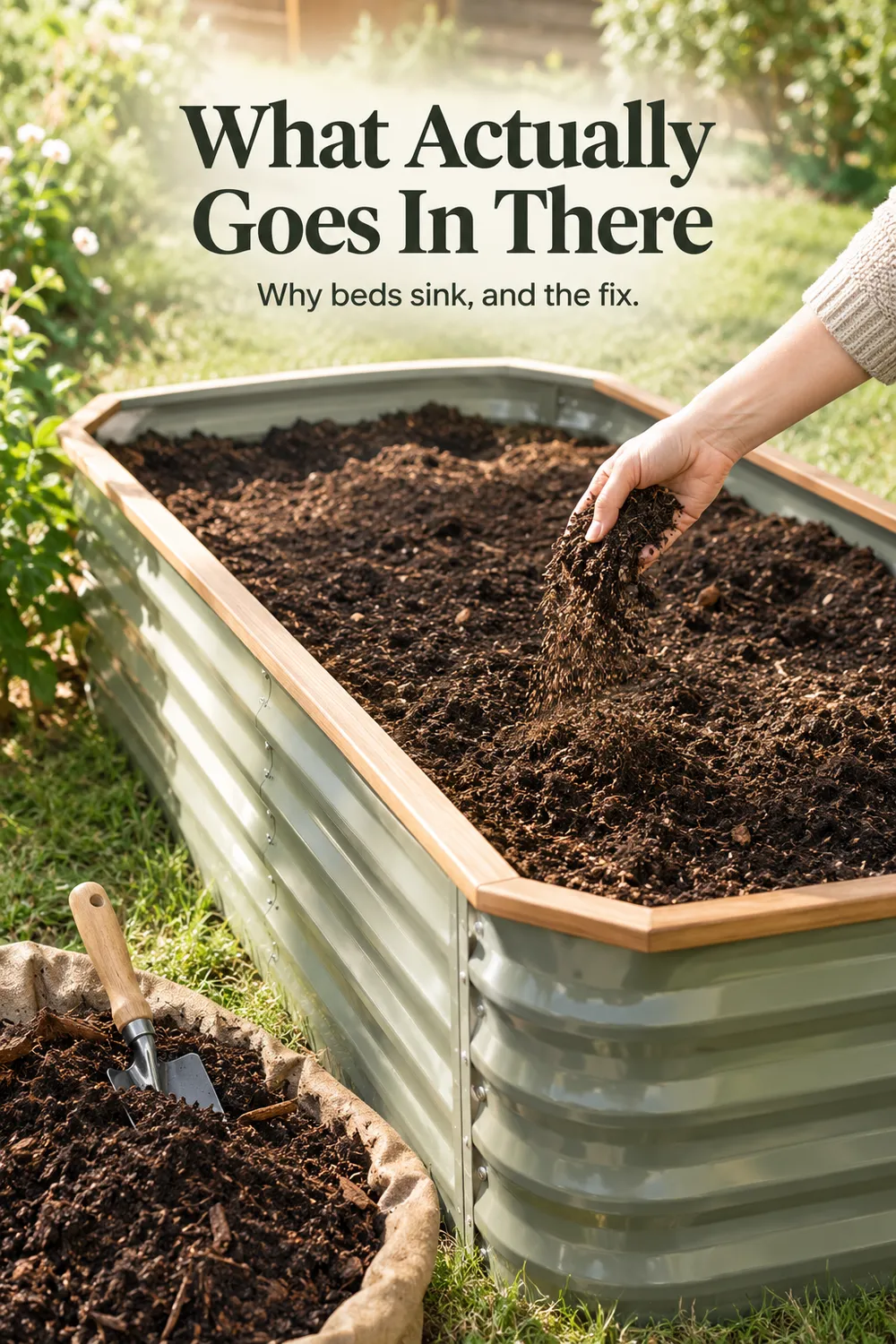
Picking which raised bed kit to buy is the easy decision. What goes inside it is the one that actually determines whether the bed is still producing well next year, and it’s also the step most beginner guides skip past with a vague “fill with good soil.”
Bagged topsoil alone compacts hard and drains poorly. Straight potting mix alone is light and fluffy but has almost no long-term nutrition and gets expensive fast at raised-bed volume. Neither is really wrong, but neither is a finished answer, and the bed that gets filled with whatever was cheapest at the garden center is usually the one that looks tired by the second season.
Why the soil level drops on its own
A new raised bed mix is typically 30 to 50 percent organic matter by volume, meaning compost, aged manure, or peat moss. Soil bacteria, fungi, and earthworms break that material down continuously, and as bulky organic particles turn into finer humus and gas, the physical volume shrinks. A first-year bed can visibly sink four to six inches by the end of the season, simply because the freshest, least-decomposed material loses the most volume first (Small Kitchen Garden).
This isn’t a sign you did something wrong. It’s what happens to any mix with a real amount of organic matter in it, every time.
A reasonable ratio, not a strict recipe
University extension programs land in a fairly tight range rather than one exact number. Michigan State University Extension recommends a 2:1 ratio of topsoil to compost. Penn State Extension suggests roughly 70 percent soil to 30 percent compost. University of Minnesota Extension puts it at 2/3 to 1/2 topsoil with the remainder plant-based compost. University of Maryland Extension recommends a 1:1 mix of compost and a soilless growing mix, with up to 20 percent topsoil added for beds at least 16 inches deep (Ask Extension, University of Maryland Extension).
Roughly two parts topsoil to one part compost is the closest thing to a consensus starting point, and it’s forgiving. Quality topsoil, a loamy blend of sand, silt, and clay rather than pure fill dirt, matters more than hitting an exact ratio.
The part that actually gets skipped: depleted nutrients, not just lower volume
A raised bed is a closed system. Whatever nutrients are in the mix when you fill it are the only nutrients your plants have access to, and each growing season pulls some of that out through plant uptake while microbes consume more of the organic matter. The bed can look full and still be running low on what plants actually need, which is a different problem than the visible sinking and easy to miss if you’re only checking the soil level.
The annual habit that fixes both problems
The standard fix for settling and depletion is the same one: add a 2 to 3 inch layer of finished compost to the surface each spring before planting, rather than waiting until the bed looks obviously low. That single habit tops off the volume and replaces a meaningful share of the nutrients the previous season used up. It’s a five-minute job with a wheelbarrow, not a rebuild.
Beyond that first spring top-up, the mulch habits from our backyard vegetable garden guide do real work here too: a mulch layer slows the same moisture loss that speeds up organic breakdown, so a well-mulched bed needs slightly less replenishing than a bare one.
What to do if your bed already looks tired
If a bed is a season or two old and visibly lower than when you filled it, you don’t need to empty and refill it. Add compost to bring the level back up, work it lightly into the top few inches, and treat that as the new baseline for spring top-ups going forward. Full amendment or rebuilding is rarely necessary unless the original fill was mostly cheap fill dirt with no organic matter in it at all, in which case a bed of any age gets a real upgrade from mixing compost through the top half.