Easy Backyard Vegetable Garden Ideas for Busy Families
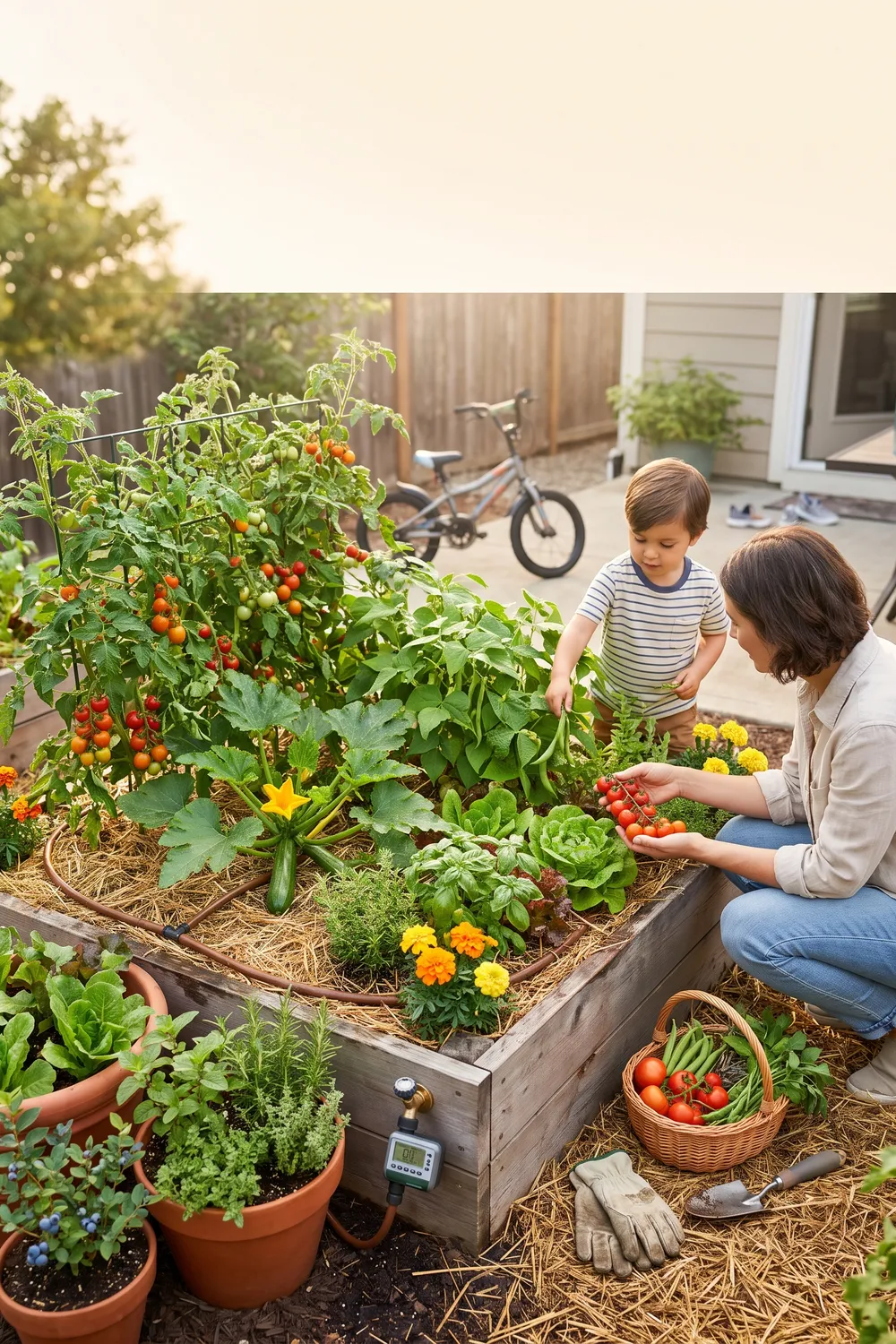
Most vegetable gardening advice assumes you have time to check on plants daily: water in the morning, watch for pests in the evening, weed on the weekend. That’s not a plan, it’s a second part-time job. The ideas below focus on setting things up once so most days don’t require doing anything at all.
1. Start smaller than feels ambitious
The biggest predictor of a garden getting abandoned by July isn’t lack of interest, it’s size. A 4-by-4-foot bed or a few large containers takes minutes to water and weed. A 20-by-20-foot plot takes an hour, and an hour you don’t have most days turns into a plot you avoid entirely. Start with less space than you think you need. You can always expand it next year once you know what a realistic amount of upkeep actually looks like for your schedule.
Where this doesn’t help: if you’re trying to grow enough of one crop to actually feed a family for a season, like canning-quantity tomatoes, a small footprint won’t get you there. Scale up deliberately for that, don’t default small.
2. Mulch heavily from day one
A thick layer of mulch, straw, shredded leaves, or wood chips depending on what’s growing, does two jobs at once: it blocks sunlight from weed seeds so fewer weeds germinate in the first place, and it slows evaporation, so the soil underneath stays damp longer between waterings. Both of those directly cut down on the two most repetitive garden chores.
Where this doesn’t help: seeds you’re direct-sowing need bare soil contact to germinate, so mulch goes down after seedlings are up, not before they’ve sprouted.
3. Put watering on a timer
A basic drip irrigation kit on a timer removes the single most schedule-dependent task in gardening. Drip lines deliver water slowly, right at the base of each plant, instead of soaking the whole bed the way a hose or sprinkler does, so less water is wasted to evaporation and runoff. Once it’s set up, watering stops being something you have to remember.
Where this doesn’t help: it’s an upfront project, running tubing, connecting a timer, hooking it all to a spigot, so it’s not the fix for someone who wants zero setup time this weekend. It pays off over the rest of the season, not on day one.
4. Pick forgiving crops, skip the fussy ones
Zucchini, cherry tomatoes, green beans, and most herbs tolerate inconsistent watering and a missed week of attention without much drama. Corn, cauliflower, and celery are much less forgiving, they want steady moisture and consistent care to produce anything worth eating, and they punish neglect more directly. Choosing the first group over the second isn’t a smaller garden, it’s the same effort producing a much higher success rate.
Where this doesn’t help: if a fussier vegetable is the actual reason you wanted a garden, like homegrown corn for a specific recipe, substituting something easier defeats the point. Grow what you actually want, just know what you’re signing up for.
5. Let some plants reseed themselves
Arugula, lettuce, dill, and cilantro all tend to bolt, flower, and drop seed on their own by the end of the season, and a portion of those seeds will sprout again the following year without you replanting anything. It’s not a guaranteed full crop, but it’s a head start that costs zero effort.
Where this doesn’t help: self-seeded plants come up wherever the seed happened to land, not in tidy rows, so this only works if you’re fine with a looser, less organized bed.
6. Use companion planting for what it’s actually proven to do, not everything
Marigolds have real documented evidence behind two specific uses: French marigolds suppress root-knot nematodes in soil, and planting them near tomatoes has been shown to slow whitefly populations. That’s genuinely useful and worth doing. What the research doesn’t support is the broader claim that marigolds, or companion planting generally, reliably deter aphids, spider mites, or most other common pests. Plant marigolds for the nematode and whitefly benefit specifically, not as an all-purpose pest shield.
Where this doesn’t help: don’t skip actual pest management, checking leaves, removing affected plants, using row covers when needed, because you assume a border of marigolds is handling it. For most pests, it isn’t.
What ties this together
None of these six ideas require more gardening skill than the standard advice does. They require less ongoing attention, which is the thing busy families are actually short on. A garden that needs daily hands-on effort will lose to a busy week eventually. One built around fewer, smarter decisions up front can survive a busy week without losing a single plant.