Best Amazon Meal Prep Containers for Busy Moms in 2026
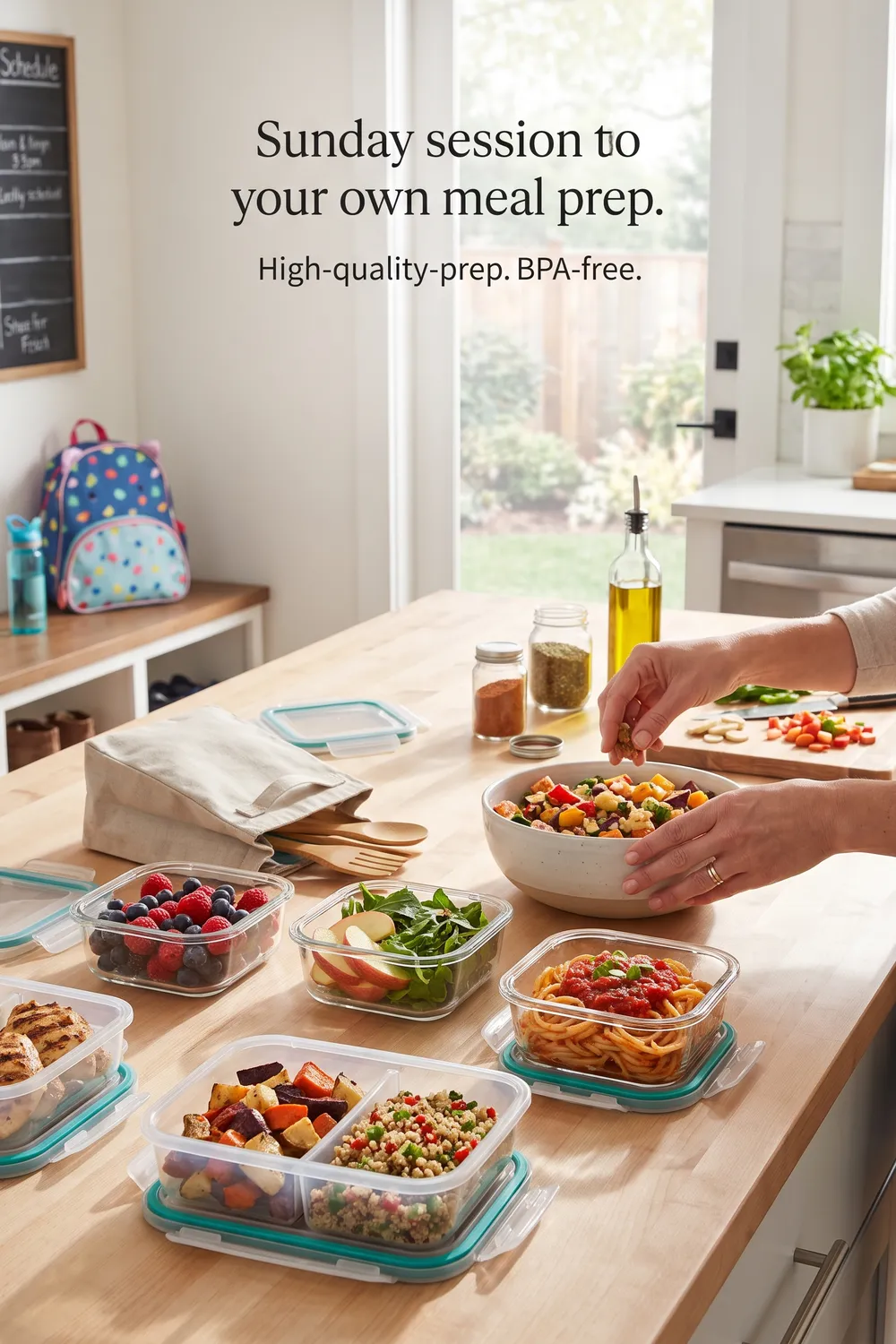
Meal prep containers get judged on the wrong things. Most reviews focus on how they look stacked in a fridge photo. What actually matters when you’re packing five lunches a week around a kid’s schedule is narrower: does the lid actually seal, can it go from freezer to microwave without cracking, and does it survive a run through the dishwasher without warping. Here are five sets that hold up on those points, and where each one falls short.
Quick comparison
| Container | Best for | Material | Compartments |
|---|---|---|---|
| Rubbermaid Brilliance | Everyday entree-plus-side meals | BPA-free plastic | 2 |
| Prep Naturals Glass | No plastic taste, reheating liquids | Borosilicate glass | 1 |
| Bentgo Prep 20-Piece | Stocking a full week at once | BPA and PFAS-free plastic | 2 or 3 |
| OXO Good Grips | Freezer-to-microwave durability | Borosilicate glass | Varies |
| Pyrex Simply Store | Plain leftovers, not portioned meals | Glass | None |
Rubbermaid Brilliance, 2-Compartment
This is the everyday pick: an entree side and a smaller side, split cleanly so sauce doesn’t run into your vegetables. The lid has built-in vents under the latches, so you can microwave with the lid still on and let steam escape instead of it building up and popping the seal. It’s BPA-free, dishwasher-safe, and freezer-safe.
Where it doesn’t help: it’s plastic, so if you’re trying to cut plastic-to-food contact entirely, this isn’t the set for you, and two compartments won’t work for anything that needs three separate components kept apart.
Prep Naturals Glass Containers
Borosilicate glass with an airtight, leak-resistant lid, which matters more than it sounds like it should. A plastic container that seals “well enough” for a sandwich will still leak soup or dressing in a bag. These are microwave, oven, and freezer safe, so the same container can go from the freezer straight into the oven without a swap.
Where it doesn’t help: they’re heavier than plastic, which matters if a kid is the one carrying their own lunch bag, and glass means one dropped container is a container gone, not a scratched one.
Bentgo Prep, 20-Piece Set
The value pick if you’re trying to portion out an entire week without running the dishwasher mid-week. Twenty pieces gives you enough containers to prep Sunday and not touch a container again until the following weekend. They’re stackable, so a full week’s worth doesn’t take over the whole fridge shelf, and they come in both 2 and 3-compartment versions depending on the meal.
Where it doesn’t help: at this price point and piece count, the lids are less rugged than the glass options above, and they’re not built for years of daily use the way a smaller, sturdier set is.
OXO Good Grips
Borosilicate glass built specifically to handle thermal shock, meaning you can pull one straight from the freezer and put it directly into a hot oven or microwave without the glass cracking from the temperature jump. That’s a real limitation with cheaper glass containers, which can shatter under exactly that kind of sudden change.
Where it doesn’t help: OXO doesn’t sell these in the largest bulk packs, so if you need to outfit an entire week in compartmentalized containers, you’ll likely need to combine this set with another.
Pyrex Simply Store
No compartments, just straightforward glass storage. This isn’t a meal-prep container in the portioned sense. It’s what you reach for when you’ve got straightforward leftovers that don’t need dividing: a full pot of soup, rice, or a casserole. Pyrex has been making temperature-resistant glass containers for over a century, and the lids snap on securely enough to stack in a crowded fridge without popping open.
Where it doesn’t help: if the whole point is portion control or keeping foods separated, this is the wrong shape entirely. Buy it for storage, not for meals that need dividers.
How to actually choose
Compartments matter if you’re portioning a full meal (protein, starch, vegetable) and want them to stay separate until you eat. They don’t matter, and just add cost, if you’re mostly storing soups, grain bowls, or anything that gets mixed together anyway. Glass costs more and weighs more, but it doesn’t hold onto smells or stains from tomato sauce and turmeric the way plastic can after a few months. Plastic is what you want if a container is going in a kid’s backpack, where a drop is a matter of when, not if.
None of these need to be the only set you own. A lot of busy-mom kitchens end up with a plastic set for backpacks and school lunches and a glass set for adult meal prep that stays home. That split solves more real problems than any single “best” container does.